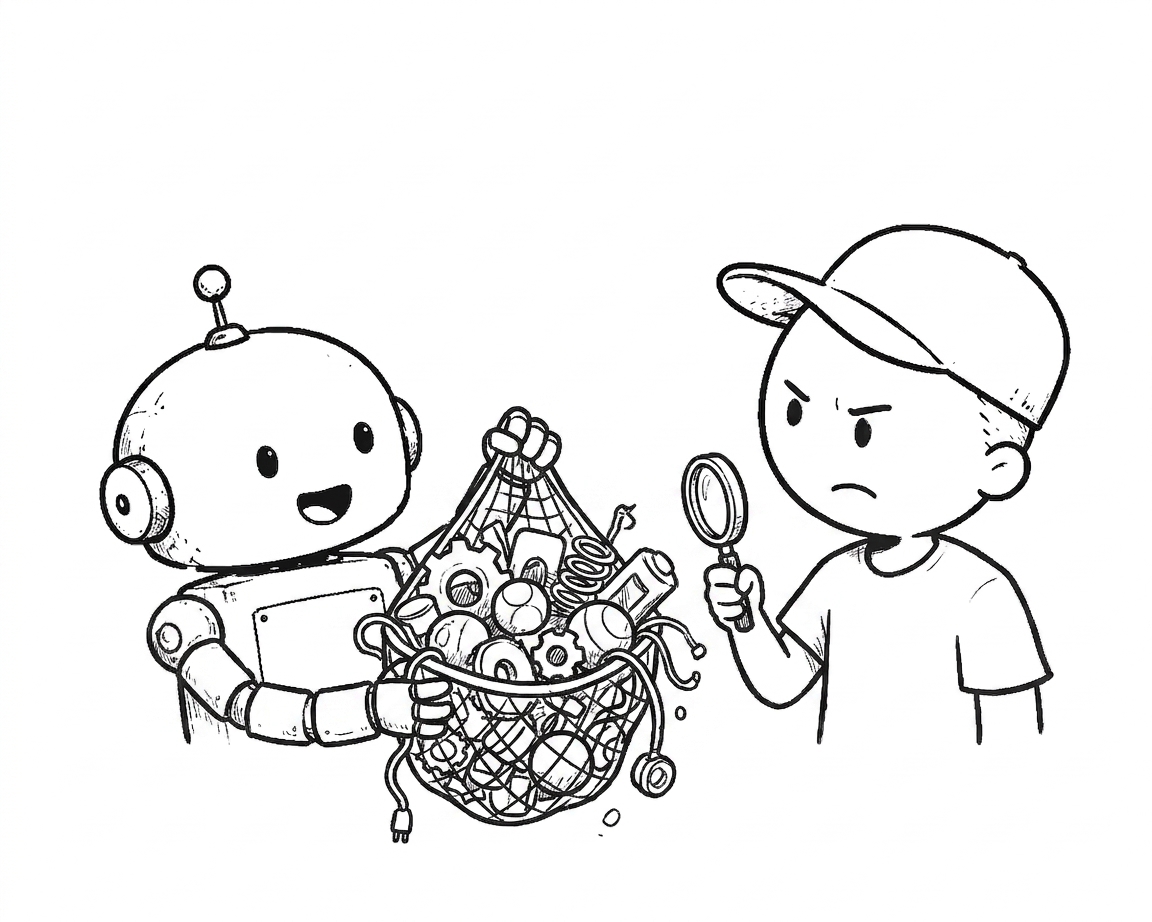
the robot holding out a net bag stuffed with a tangle of gears, springs, cables and odds and ends, while the boy in the cap frowns at it through a magnifying glass

I Added a Knowledge Graph to My Search. It Made It Worse.

My second brain searches over a vault of markdown using BM25 + vectors + graph expansion. I’d been telling people the graph improved recall. Then I finally benchmarked it, and plain keyword search beat my fancy hybrid — the graph was actively dragging the right answers out of the results. Here’s the scorecard and what it taught me about where graphs actually belong.
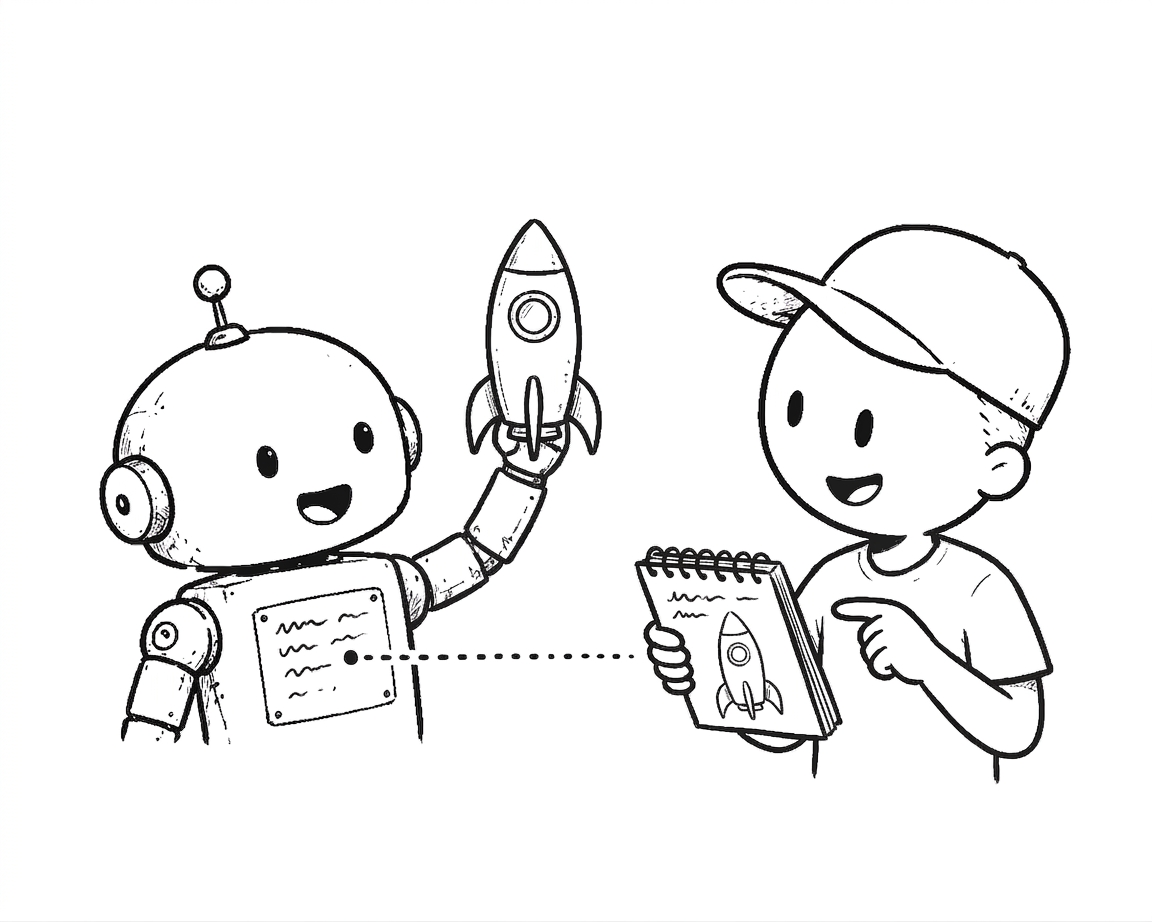
the robot holding up a small rocket, a written page on its chest panel joined by a dotted line to a spiral notepad in the boy's hands showing the same rocket sketched on it

I Run GitOps for My Brain

An AI agent on a scheduled idle walk through my notes pointed out that I’d built the same architecture three times — at work, in my homelab, and in my second brain — and that the third copy was missing the part that makes GitOps work. It was right. So we shipped the missing piece the same day.

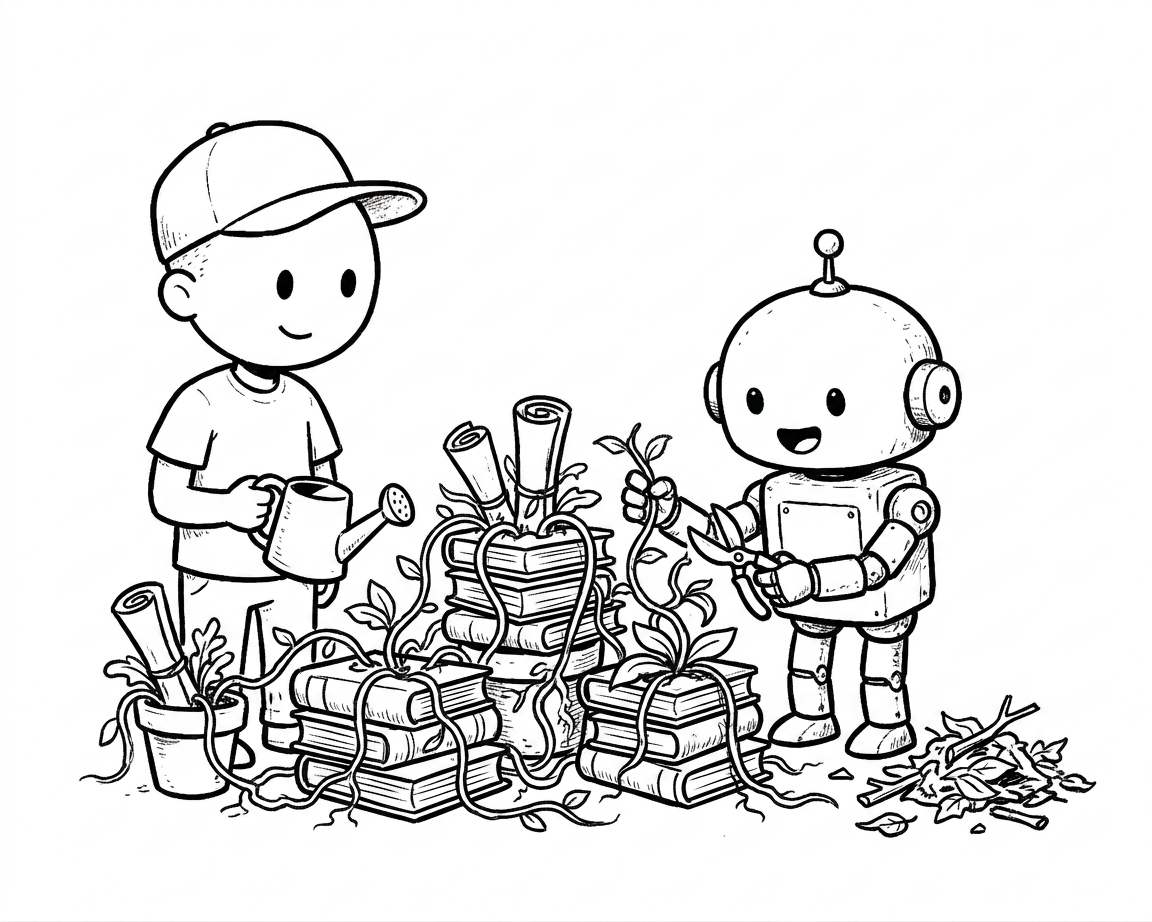
the boy in the cap with a watering can and the robot with a pair of shears tending a garden bed made of stacked books and rolled scrolls, with vines growing out of them and a pile of cut trimmings on the ground

🌱 My Second Brain Weeds Itself Now

I gave my markdown knowledge base a nightly gardener — an AI that finds orphan notes and missing links and fixes them, every change a reviewable git commit. The fun part was the Kubernetes wall I hit on the way.

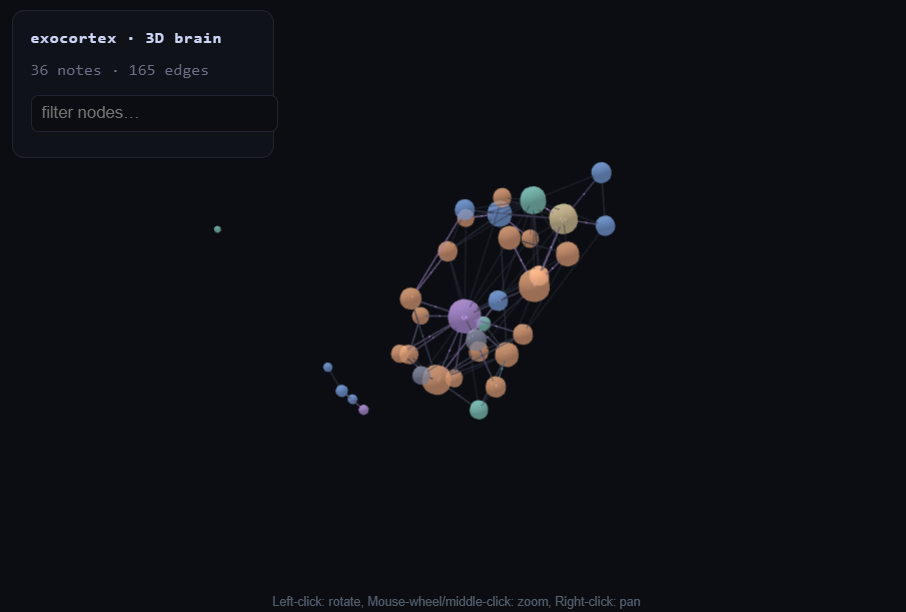
The exocortex knowledge base rendered as a 3D force-directed graph — 36 notes, 165 edges

🧠 A Second Brain You Can `git clone`

My first second brain died the way most do — on multi-device sync. The rebuild: plain markdown as the source of truth, every clever layer derived and disposable, and an AI that tends it through reviewable git diffs.