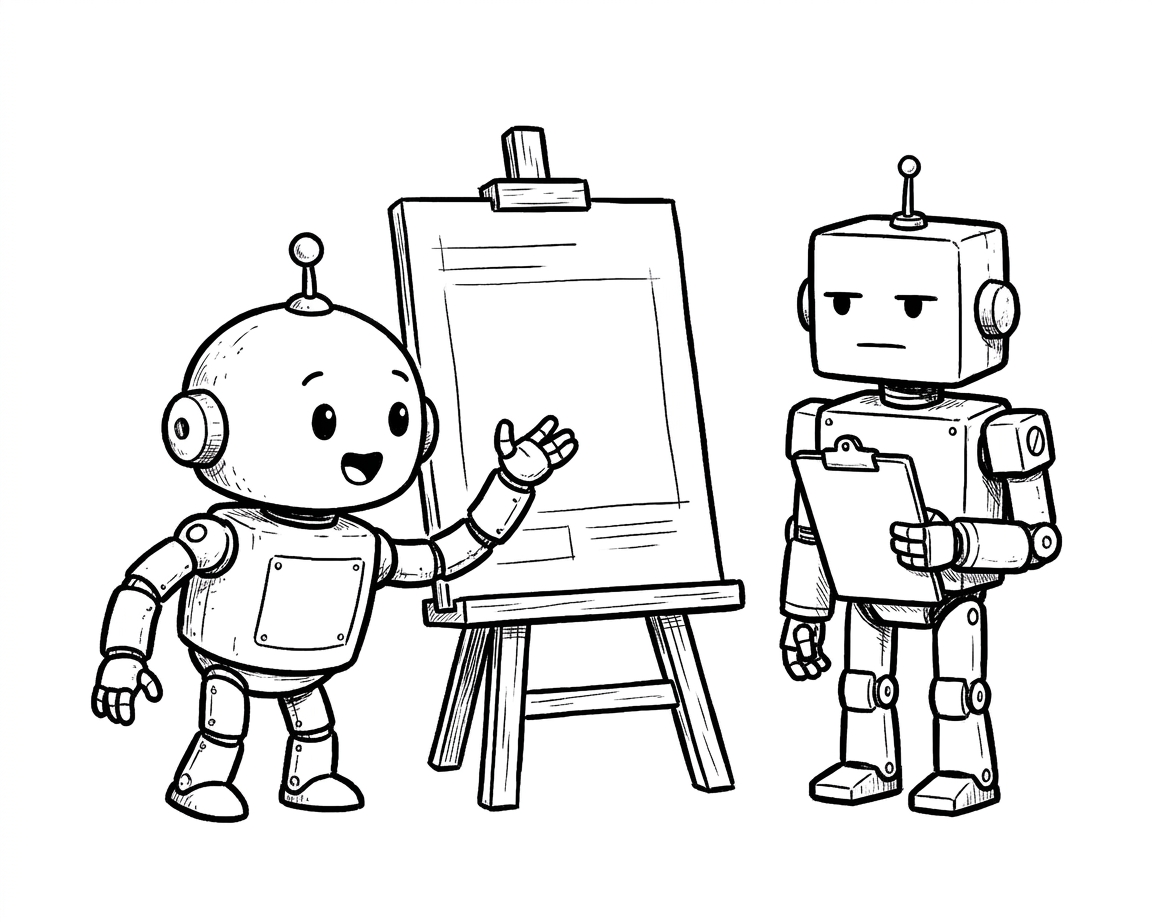
two robots standing on either side of an easel holding a blank page layout — the familiar round-headed robot gesturing at the design, and a square-headed robot with a flat unimpressed expression holding a clipboard

I Let Two AIs Argue Over My Homepage — To See If They Actually Think Differently

A single model playing scrum master is just one mind doing all the voices. So I gave two models from two different labs the same deliberately vague design brief, let them collide, and watched what each one refused to give up. I wasn’t trying to prove the merge was better — I was trying to prove they were different.
the boy in the cap with a small bird perched on his shoulder, holding up a card showing a single anonymous person icon

The Third Bird Reads People, Not Pages — and Never Hits Send

Two birds already read the web for me. The third one reads people — it mines my GitHub graph for humans worth a first message and writes the opening line, but it never sends. The word that changed the whole design was ‘who’, and the trap it had to dodge is that finding people like me is exactly the easy thing embeddings do best.

the boy in the cap holding up a tablet showing a browser window with a globe on it, two small birds perched together on his shoulder

Two Birds That Read the Web for Me: One Hoards, One Scatters

I gave my second brain two agents that read the outside world and collide it against my notes. A Magpie watches my GitHub stars and only speaks when something hits live work. A Blue Jay reads a handful of RSS feeds and surfaces the distant, not-yet-relevant connection. They share a security spine — and they have deliberately opposite jobs. Here’s why the split is the whole design.